
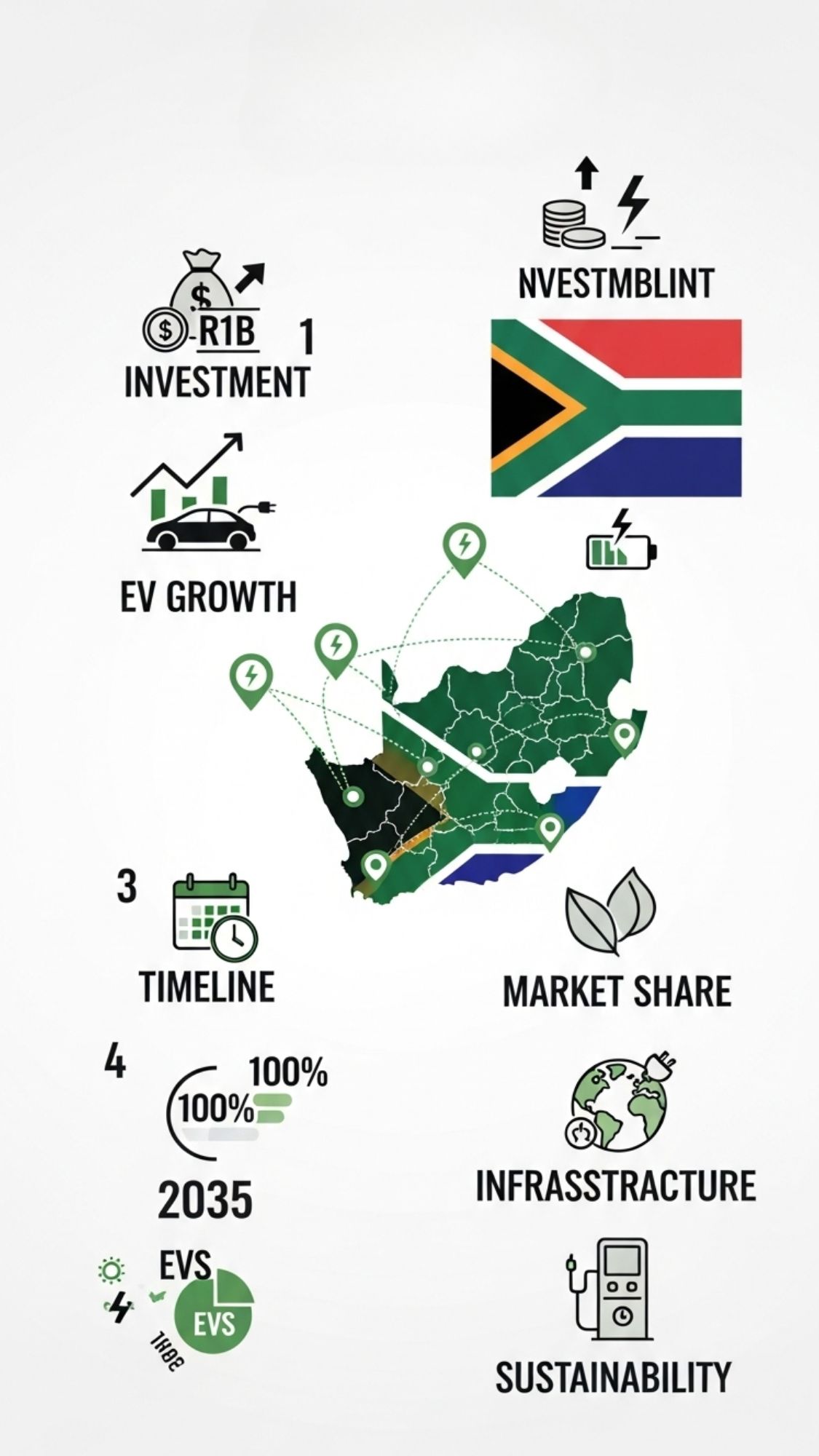
South Africa has announced a major R1 billion investment to transform its transportation system through electric vehicles. The country plans to achieve a fully electric vehicle market by 2035 as part of a broader shift toward sustainable transportation options that align with international environmental goals. This investment represents an important commitment to lowering carbon emissions and creating a healthier environment for future generations. The substantial funding directed toward the electric vehicle industry demonstrates South Africa’s dedication to modern technology while creating opportunities for economic development through new jobs and improved energy use. The program is expected to strengthen local manufacturing operations and establish South Africa as an important participant in the worldwide electric vehicle industry. Government officials believe this strategic investment will attract additional private sector involvement and encourage innovation across multiple sectors of the economy. The transition to electric vehicles will require significant infrastructure development including charging stations & updated power grid systems. These improvements will support the growing number of electric vehicles on South African roads while ensuring reliable access to charging facilities for all users. Industry experts view this initiative as a positive step that could inspire other African nations to pursue similar environmental and economic objectives. The success of this program may serve as a model for developing countries seeking to balance industrial growth with environmental responsibility.

Key Benefits of Electric Vehicles in South Africa
– Reduction in overall carbon emissions

– Job creation within the electric vehicle ecosystem
– Lower dependence on fossil fuel imports

– Improved air quality in major urban centres
– Strengthening of local manufacturing industries
– Growth in foreign direct investment
– Acceleration of technological innovation
– Development of sustainable transport infrastructure
Government’s Role in EV Market Expansion
The South African government plays a central role in driving the expansion of the electric vehicle market. Through the introduction of supportive policies and targeted incentives, authorities aim to make EVs more affordable and accessible to the wider population. Measures such as tax rebates for buyers, production subsidies for manufacturers, and increased funding for research and development are helping to fast-track EV adoption. In addition, the government is working closely with private sector partners to roll out a nationwide charging network, ensuring electric vehicles become a practical choice across the country.

Challenges and Opportunities in EV Adoption
The transition to electric vehicles in South Africa presents both challenges and opportunities. A major obstacle is the limited charging infrastructure, which requires large-scale investment and coordinated planning. High upfront vehicle costs also remain a concern for many consumers. However, these challenges open the door for innovation, skills development, and industrial growth. By focusing on local manufacturing and advanced technologies, South Africa can address these barriers while positioning itself as a competitive player in the global EV landscape.
EV Adoption Challenges
– High initial purchase costs of electric vehicles
– Insufficient public charging infrastructure
– Low consumer awareness and understanding
– Regulatory and policy constraints
– Shortage of skilled technical workforce
Opportunities for Growth
– Expansion of local EV manufacturing capabilities
– Increase in foreign and domestic investments
– Advancements in automotive and battery technology
– Wider rollout of charging networks
– Creation of jobs in green and sustainable industries
Transforming South Africa’s Transport Sector with EVs
South Africa’s growing commitment to electric vehicles is expected to transform the transport sector in the coming years. Widespread EV adoption will significantly lower carbon emissions and support global climate goals. With government leadership at the forefront, efforts are focused on building a strong support system for the EV market, including nationwide charging infrastructure and incentives for manufacturers and consumers. This transition marks a critical step toward a cleaner, more sustainable transport future.
 Unlocking the Future: R850 Million Government Investment Powers 1,500MW Battery Surge by 2026
Impact of EVs on South Africa’s Economy
A shift toward electric mobility is set to deliver substantial economic benefits for South Africa. Increased investment in the EV sector is expected to drive economic growth while creating jobs across manufacturing, maintenance, and research fields. At the same time, reduced reliance on fossil fuels will strengthen energy security and improve long-term economic stability, positioning the country for a more resilient future.
– Rising investment in the EV industry
– Job creation across multiple sectors
– Enhanced local manufacturing capacity
– Improved national energy security
Technological Advancements in the EV Sector
South Africa’s push toward electric vehicles is encouraging rapid technological progress. Innovations in battery systems, charging technology, and vehicle design are reshaping the industry. Local engineers and researchers are developing efficient, cost-effective solutions that improve performance while lowering production costs. These advancements are vital for building a competitive and sustainable EV market within the country.
– Development of next-generation battery technologies
– Smart and fast charging innovations
– Enhanced vehicle efficiency and design
– More affordable production techniques
Incentives for Electric Vehicle Buyers
To encourage consumer adoption, the South African government has introduced various incentives aimed at reducing ownership costs and improving convenience. Financial incentives such as tax rebates and subsidies help lower purchase and installation expenses, while non-financial benefits enhance everyday usability. These measures are designed to make electric vehicles a more attractive option for households nationwide.
– Tax rebates on EV purchases
– Subsidies for home charging installations
– Dedicated parking spaces for EV users
– Toll exemptions for electric vehicles
Partnerships and Collaborations in the EV Sector
The success of South Africa’s electric vehicle market depends heavily on strong collaboration between government bodies, private companies, and international partners. Through shared expertise and resources, these stakeholders are addressing infrastructure gaps, advancing technology, and shaping a supportive regulatory environment. Such partnerships are essential for sustaining long-term growth and innovation within the EV ecosystem.
– Collaboration between government and private sector
– International partnerships for technology transfer
– Joint ventures in manufacturing and research
– Public-private initiatives for charging infrastructure